Blog

AI anxiety is reshaping consumer trust in apps

Consumer expectations around privacy have never been higher. As digital advertising evolves, so do the anxieties that shape whether users feel comfortable engaging with apps and platforms. From fears of identity theft to skepticism about AI, the gap between what consumers want and what they trust remains one of the biggest challenges for publishers and advertisers.

We surveyed 4,000 consumers in 2025 across the US and UK for our 2025 In-App User Privacy Report. The results show not only rising privacy concerns but also a growing demand for transparency, control, and reassurance. Below, we share highlights from the findings and why they matter. For the full breakdown, including category-level insights and regional trends, download the complete report.

Privacy concerns are rising fast

Two years ago, consumers were cautious about sharing data. In 2025, that caution has turned into real anxiety. Our survey shows that two-thirds of respondents are now more concerned about risks such as unauthorized access and cybercrime.
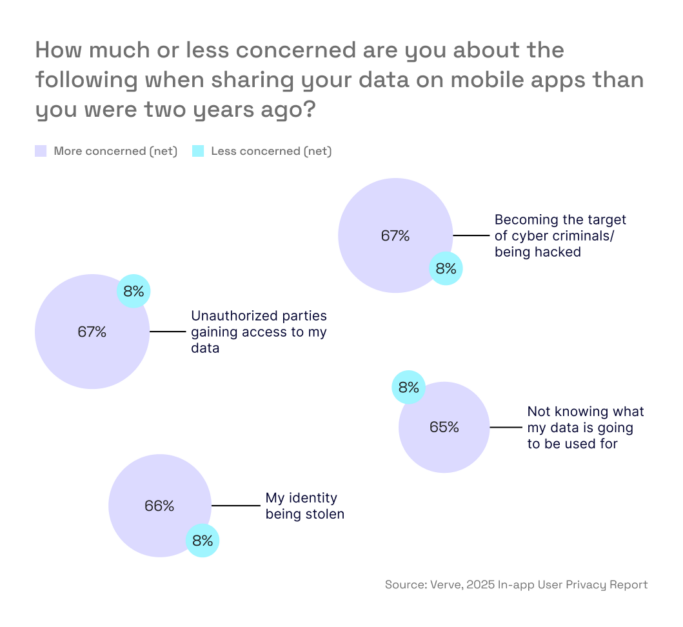
User concern when sharing data on mobile apps: 2025 vs. 2024

Equally concerning: only a small fraction of users feel less worried than they did two years ago. In other words, the trust gap is getting wider.

This distrust isn’t spread evenly. Women reported the steepest increases in concern, with 71% worried about unauthorized access compared to 63% of men. Age also plays a role, but you’ll have to download the full report for that data.
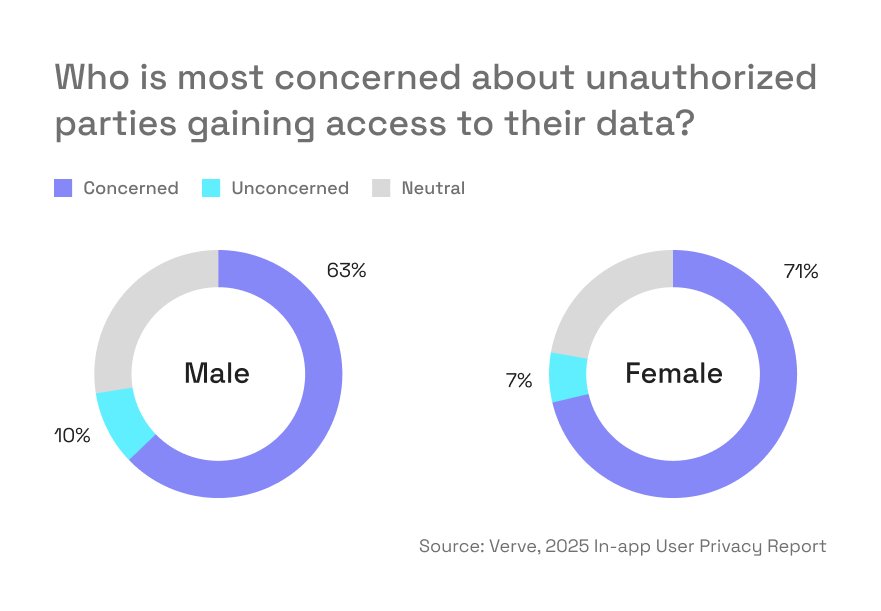
Who is more concerned about unauthorized parties gaining access to their data, by gender

For advertisers and publishers, it is important to provide the most critical demographic groups proactive clarity about how data is collected, protected, and applied.

What builds trust

The good news: consumers aren’t rejecting data-driven advertising outright. They’re simply raising the bar for what earns their trust. When we asked consumers what would make them feel more comfortable, respondents pointed to specific steps that publishers and platforms can take:

  • Stop third-party sharing: 42% said trust would improve if they knew data wasn’t shared externally.
  • Clarity on handling: 40% want clear explanations of how their data is stored and protected.
  • Proof of security: 38% want visibility into the measures keeping their data safe.
  • Choice and control: 37% want the ability to manage how much data they share.

Trust is earned through transparency, user empowerment, and demonstrable security.

For publishers, that means building intuitive privacy settings and making them easy to access. For advertisers, it means working with partners who can guarantee secure, privacy-first environments while delivering relevance.

The new AI factor

One of the most striking shifts between 2024 and 2025 is the surge in concern over how consumer data is used to train AI models. Nearly two-thirds (65%) of respondents said they are now more worried about this issue than they were two years ago. That’s a 40% spike in just the past 12 months.
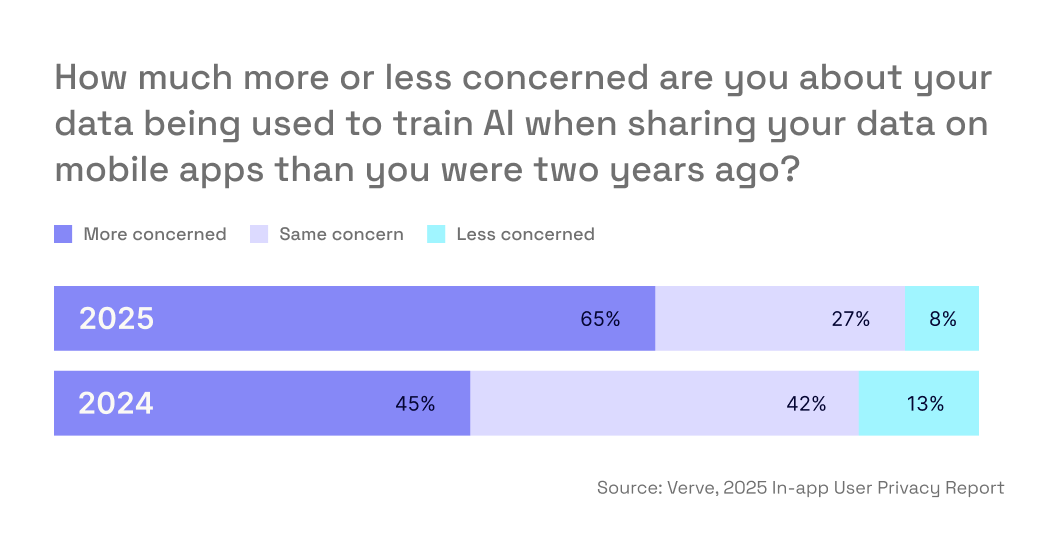
This anxiety extends beyond general data fears. It reflects a growing unease with the speed and opacity of AI adoption in everyday digital experiences. Consumers are asking questions like:

  • Is my data being used to train algorithms I don’t understand?
  • Who benefits from this training: me, or the platforms?
  • How can I be sure this technology is safe and fair?

The demand for transparency here is overwhelming: 97% of respondents agreed that publishers and platforms need to do more to explain how consumer data is collected, handled, and applied.

“Consumer concerns around AI are at an all-time high, but it’s important to remember that AI and machine learning have been foundational in advertising for years. The challenge now goes beyond advancing the technology. It’s about bringing consumers along by showing them the usefulness, safety, and value of these tools in creating better, more relevant experiences.”

For advertisers and publishers, this is a pivotal moment. Transparency around AI must be baked into every interaction.

How to interpret the data

The survey results paint a clear picture: consumers are just as vocal about their fears as they are about what would reassure them. They worry about unauthorized access, hacking, and unclear data usage; however, they also outline specific steps that would improve trust. Framing these side by side highlights exactly where publishers and advertisers can focus their efforts.

Top Concerns
What builds trust
Unauthorized access (67%)
No third-party data sharing (42%)
Cybercrime & hacking (67%)
Clear handling & storage info (40%)
Identity theft (66%)
Visible security measures (38%)
Unclear data use (65%)
Control over data sharing (37%)

Today’s consumers expect more than protection. They need clarity and choice. Addressing both sides of this equation will turn privacy into a trust-building opportunity that deepens engagement and loyalty long-term.

Are you ready to earn trust from the 97% demanding more transparency?

The state of consumer privacy in 2025 is defined by rising anxiety, sharper demographic divides, and new questions around AI. But it’s also defined by opportunity. The data in this post is just the beginning. Our 2025 In-App User Privacy Report includes detailed breakdowns of privacy sentiment by device, platform, and region, along with actionable recommendations for publishers and advertisers.

Download the full report to access the complete findings.

Consumer expectations around privacy have never been higher. As digital advertising evolves, so do the anxieties that shape whether users feel comfortable engaging with apps and platforms. From fears of identity theft to skepticism about AI, the gap between what consumers want and what they trust remains one of the biggest challenges for publishers and advertisers.

We surveyed 4,000 consumers in 2025 across the US and UK for our 2025 In-App User Privacy Report. The results show not only rising privacy concerns but also a growing demand for transparency, control, and reassurance. Below, we share highlights from the findings and why they matter. For the full breakdown, including category-level insights and regional trends, download the complete report.

Privacy concerns are rising fast

Two years ago, consumers were cautious about sharing data. In 2025, that caution has turned into real anxiety. Our survey shows that two-thirds of respondents are now more concerned about risks such as unauthorized access and cybercrime.

User concern when sharing data on mobile apps: 2025 vs. 2024

Equally concerning: only a small fraction of users feel less worried than they did two years ago. In other words, the trust gap is getting wider.

This distrust isn’t spread evenly. Women reported the steepest increases in concern, with 71% worried about unauthorized access compared to 63% of men. Age also plays a role, but you’ll have to download the full report for that data.

Who is more concerned about unauthorized parties gaining access to their data, by gender

For advertisers and publishers, it is important to provide the most critical demographic groups proactive clarity about how data is collected, protected, and applied.

What builds trust

The good news: consumers aren’t rejecting data-driven advertising outright. They’re simply raising the bar for what earns their trust. When we asked consumers what would make them feel more comfortable, respondents pointed to specific steps that publishers and platforms can take:

  • Stop third-party sharing: 42% said trust would improve if they knew data wasn’t shared externally.
  • Clarity on handling: 40% want clear explanations of how their data is stored and protected.
  • Proof of security: 38% want visibility into the measures keeping their data safe.
  • Choice and control: 37% want the ability to manage how much data they share.

Trust is earned through transparency, user empowerment, and demonstrable security.

For publishers, that means building intuitive privacy settings and making them easy to access. For advertisers, it means working with partners who can guarantee secure, privacy-first environments while delivering relevance.

The new AI factor

One of the most striking shifts between 2024 and 2025 is the surge in concern over how consumer data is used to train AI models. Nearly two-thirds (65%) of respondents said they are now more worried about this issue than they were two years ago. That’s a 40% spike in just the past 12 months.

This anxiety extends beyond general data fears. It reflects a growing unease with the speed and opacity of AI adoption in everyday digital experiences. Consumers are asking questions like:

  • Is my data being used to train algorithms I don’t understand?
  • Who benefits from this training: me, or the platforms?
  • How can I be sure this technology is safe and fair?

The demand for transparency here is overwhelming: 97% of respondents agreed that publishers and platforms need to do more to explain how consumer data is collected, handled, and applied.

“Consumer concerns around AI are at an all-time high, but it’s important to remember that AI and machine learning have been foundational in advertising for years. The challenge now goes beyond advancing the technology. It’s about bringing consumers along by showing them the usefulness, safety, and value of these tools in creating better, more relevant experiences.”

For advertisers and publishers, this is a pivotal moment. Transparency around AI must be baked into every interaction.

How to interpret the data

The survey results paint a clear picture: consumers are just as vocal about their fears as they are about what would reassure them. They worry about unauthorized access, hacking, and unclear data usage; however, they also outline specific steps that would improve trust. Framing these side by side highlights exactly where publishers and advertisers can focus their efforts.

Top Concerns
What builds trust
Unauthorized access (67%)
No third-party data sharing (42%)
Cybercrime & hacking (67%)
Clear handling & storage info (40%)
Identity theft (66%)
Visible security measures (38%)
Unclear data use (65%)
Control over data sharing (37%)

Today’s consumers expect more than protection. They need clarity and choice. Addressing both sides of this equation will turn privacy into a trust-building opportunity that deepens engagement and loyalty long-term.

Are you ready to earn trust from the 97% demanding more transparency?

The state of consumer privacy in 2025 is defined by rising anxiety, sharper demographic divides, and new questions around AI. But it’s also defined by opportunity. The data in this post is just the beginning. Our 2025 In-App User Privacy Report includes detailed breakdowns of privacy sentiment by device, platform, and region, along with actionable recommendations for publishers and advertisers.

Download the full report to access the complete findings.