Data-shy, but ready to buy? How shopping apps can earn user trust
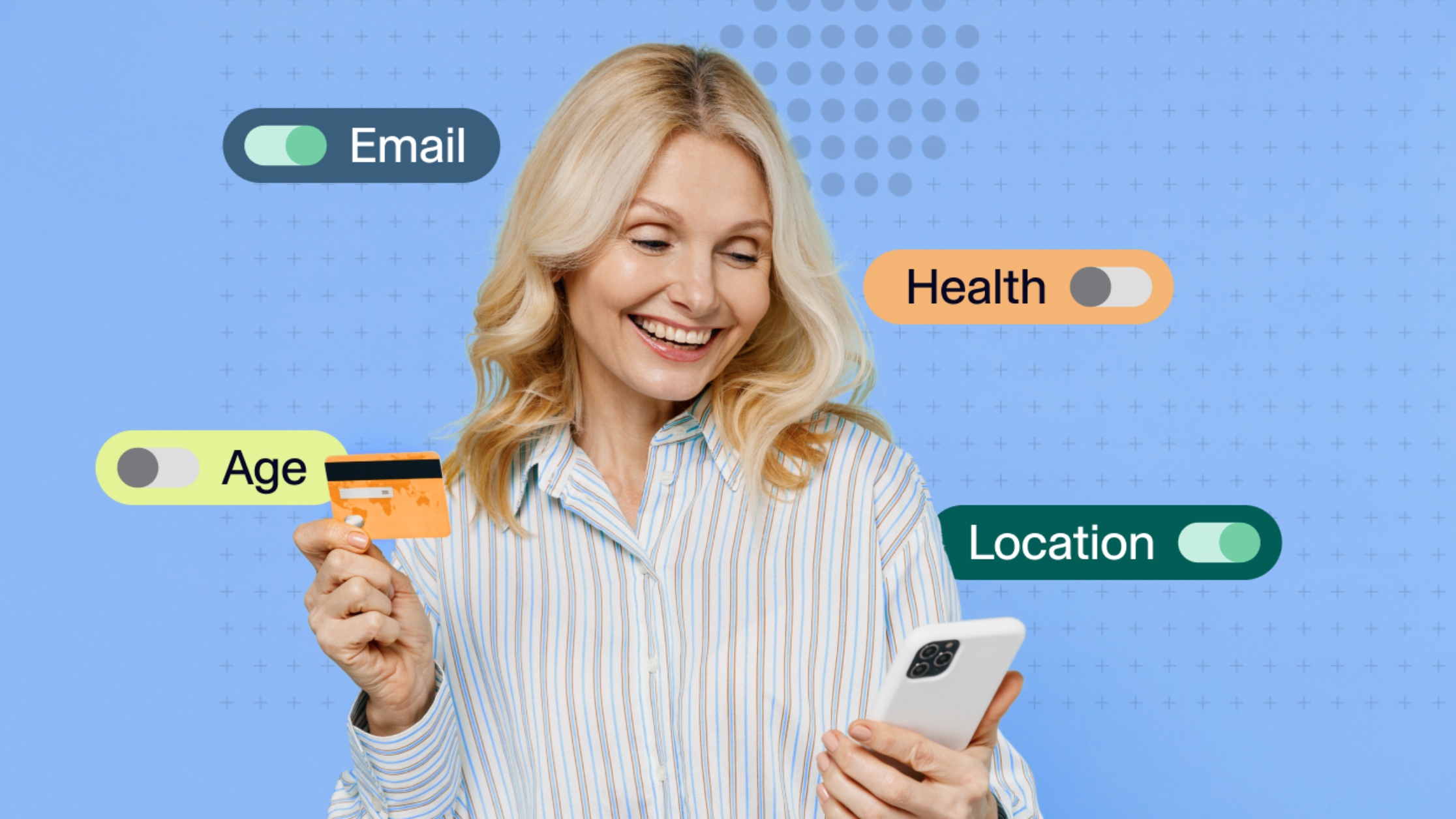
Good news for publishers of mobile shopping apps: you’re much more likely to get your users’ data than other types of apps. In our survey of 4,000 mobile users, we asked about willingness to share certain types of personal data across 10 different mobile app categories. Overall, an average of 35% of respondents said they were unwilling to share any personal data. Shopping apps fared much better, with only 23% responding that they were unwilling to share any data.
Said more simply: about three in four shopping app users are willing to share personal data with the app publisher.
| Unwilling to share any data | 2024 | 2025 | Change | Change % |
|---|---|---|---|---|
| Overall apps | 36.2% | 35.1% | -1.1 pp | -3% |
| Shopping apps | 24.0% | 23.4% | -0.6 pp | -2.50% |
How do mobile shoppers feel about sharing their personal data — and how has it changed?
As we say in programmatic, data is fuel for winning monetization and advertising strategies. It can optimize the entire user experience, ensuring speedy user acquisition, maximum lifetime value, and lower churn.
But how do app publishers effectively and ethically get actionable data from their users? It turns out consumers are more than willing to share certain types of data that can help shopping apps with targeting (i.e., immediately improve acquisition and retention). In fact, combing through the data in our 2025 In-App User Privacy Report, we discovered how consumers are actually more willing to share this type of data on shopping apps. Take a look:
| Data type | 2024 | 2025 | Change | Change % |
|---|---|---|---|---|
| My name | 47.7% | 41.1% | -6.6 pp | -13.84% |
| My email address | 50.1% | 47.3% | -2.8 pp | -5.59% |
| My mobile number | 29.6% | 26.8% | -2.8 pp | -9.46% |
| My health data | 6.5% | 8.3% | 1.8 pp | 27.69% |
| My region | 25.5% | 29.6% | 4.1 pp | 16.08% |
| My gender | 35.9% | 38.2% | 2.3 pp | 6.41% |
| My DOB/age | 25.7% | 26.8% | 1.1 pp | 4.28% |
| My ethnicity | 21.9% | 22.8% | 0.9 pp | 4.11% |
| Not willing to share any data | 24.0% | 23.4% | -0.6 pp | -2.50% |
Shopping app users are sharing more sensitive data
Email, name, and gender are the data that users are most likely to share with shopping apps. However, the largest gains in willingness to share are health data, gender, and region.
Health data and gender: personalization over identification
While it’s still the most-closely guarded category, sharing health-related data grew the most percentage-wise, up 27.7% from a year ago. To a lesser degree, the sharing of gender data saw an increase of 6.41% from the previous year. The change boils down to choosing personalization over identification.
A user shopping for vitamins might freely share health-related preferences. Or someone purchasing clothes will more easily share their gender. Giving this information supplies the shopping algorithm with enough data to surface products that are personalized to the user.
Region data: hyper-localized for a user’s benefit
In 2025, there was a 16.08% increase in shopping app users’ willingness to share their region or location data.
Of late, sharing location data is viewed by consumers as a privacy risk with the potential for malicious actors to compile location trails either in real time or based on past data. In fact, in our 2025 In-App User Privacy Report, the two eldest groups (45-54 and 55+ year olds) felt their personal data (including location) was not protected on any platform.
| 16-24 year olds | 25-34 year olds | 35-44 year olds | 45-54 year olds | 55+ year olds | |
|---|---|---|---|---|---|
| Less concerned (net) | 20.8% | 14.9% | 11.8% | 8.1% | 5.2% |
| More concerned (net) | 79.2% | 85.1% | 88.2% | 91.9% | 94.8% |
However, there are immediate benefits when location data is used properly. For example, shoppers who opt to share details about their location gain more accurate shipping times and fees, access to local inventory, and even relevant weather-based recommendations.
Shopping app users don’t want to get too personal
On the flip side, the survey data shows a distinct cool-down in the willingness to share personally identifiable information with shopping apps:
- Names were down 6.6% from 2024
- Mobile phone numbers were down 2.8%
- Email addresses were down 2.8%
Why users are reluctant to share contact info
The reluctance is not surprising considering these data points are commonly used for logging into accounts and apps — and hackers are always busy trying to get in. Just in October 2025, organizations worldwide experienced an average of 1,938 cyber attacks per week.
Additionally, giving out phone numbers and email addresses brings on the risk of aggressive marketing, spam, and phishing emails. In the first quarter of 2025, 12.5 billion suspected spam calls were flagged globally, or roughly 137 million spam calls a day. And an estimated 3.4 billion phishing emails were sent daily in 2025, with 47% successfully clearing all the standard email security filters.
Should shopping apps ask for users’ phone numbers?
It depends — publishers should be careful not to turn off users by asking for too much data too soon.
“I don’t think enough apps do this right, but ask for the data further down the funnel. Don’t ask for it right away,” said Stephanie Pilon, CMO at Singular in our recent panel discussion. “You can make that part of the onboarding process. Doesn’t have to be day one, it can be day ten.”
Importantly, any request for data should offer clear value to the user. Shopping apps that offer a text-specific promo code for opting into SMS do this well.
Willingness to share: regional differences
The 2025 In-App User Privacy Report surveyed over 4,000 respondents from both the US and the UK. And there are interesting differences between the willingness to share data by geographic region.
| UK | USA | |
|---|---|---|
| My name | 43% | 39% |
| My email address | 48% | 47% |
| My gender | 39% | 37% |
| My mobile number | 25% | 28% |
| My DOB/age | 27% | 26% |
| My region | 31% | 28% |
| My ethnicity | 24% | 22% |
| My health data | 9% | 7% |
| N/A – I’m not willing to share any personal data with this type of app | 24% | 23% |
In general, UK consumers are more willing to share all types of data except for mobile numbers, with only 25% of UK consumers willing to share versus the US’ slightly higher 28%.
The data type that contains the biggest difference? Names. 43% of UK consumers are willing to share their name with a shopping app versus only 39% of US consumers.
As early as 2024, we were already seeing this trend in both the UK and the US as more control over app privacy settings resulted in a general willingness to share data with apps of all kinds. But why are UK consumers more open than those in the US? One theory: more robust data privacy protections in the UK (and Europe more broadly) are giving consumers enough peace of mind to share personal data more freely.
Willingness to share: age differences
Was there a difference in terms of which age groups were more willing to share data with shopping apps than others?
Gen Z, Millennials less willing to share names & numbers
While willingness to share email addresses decreased from 2024 to 2025 across all age ranges, names had an interesting trend where the greatest decrease in willingness came from the youngest groups: Gen Z’s 16-24 year-olds (-9% decrease) and Millennials 25-34 year-olds (-8% decrease).
Likewise, the greatest decrease in willingness to share mobile numbers also belonged to the two youngest age groups, both having a -6% decrease from 2024.
Millennials, Gen X more willing to share age and location
Gender was a data point where almost every age group increased their willingness to share, although the youngest audience (16-24) showed no change from 2024 to 2025, staying at 35%.
Every age group was more willing to share region or location data in 2025, but the most dramatic change came from the Millennials: 35-44 year olds had a +9% increase, followed by 25-34 year olds with a +6% increase.
As for date of birth/age data, the 16-24 group was the only group that decreased in willingness to share their age (-5%), while other generations saw small increases. Meanwhile, the greatest increase belonged to Gen X, the 45-54 year-olds, with a +5% increase.
Exchanging data for a personalized experience
The mix of data that shoppers are willing (and unwilling) to share tells us a clear story: consumers don’t necessarily want apps to know who they are, but they do want apps to know what they need. In the long run, it’s a value exchange: shoppers are willing to share their personal data if they gain a more personalized shopping experience that helps them shop more efficiently.
Additionally, the percentage of users who indicated they were not willing to share any data at all decreased by 2.50% in 2025. And while that number is small, it suggests that users do want to engage – just as long as the data requested feels relevant and non-invasive.